

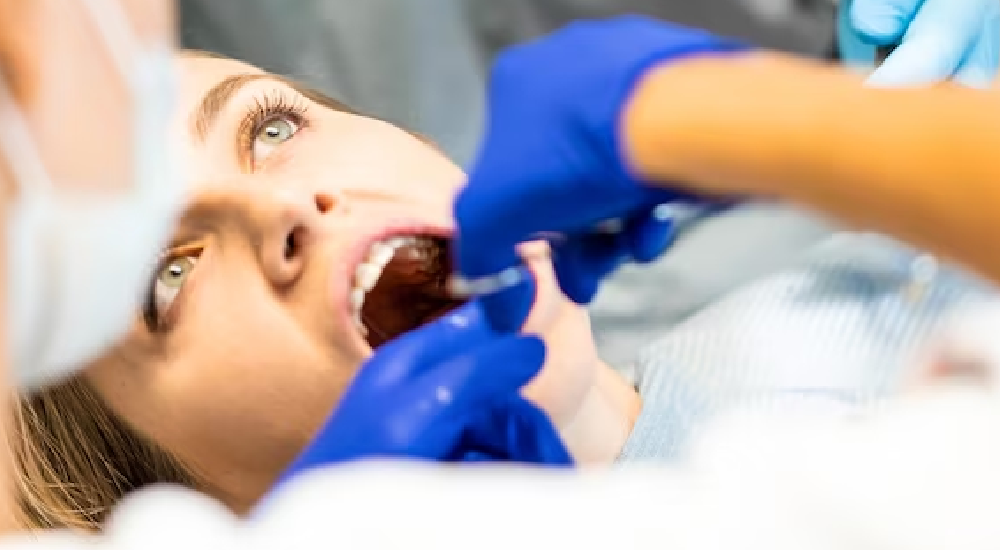
It is a bleaching (color lightening) procedure performed using hydrogen peroxide or its derivatives. The substances used release oxygen (O). With the release of oxygen, the color of the teeth also lightens. This procedure enables people with yellow, brown, or gray teeth to have whiter teeth. Bleaching should be applied to patients with healthy teeth and gums who have good oral hygiene. Tooth whitening systems, which are cosmetic products, are not necessarily suitable for every patient. Today, there are many types of tooth whitening methods, including those that patients can apply themselves or those applied by a physician. A dentist must always decide which type of tooth whitening method is suitable for the patient.Whitening Toothpastes
They ensure the removal of stains on the teeth thanks to the abrasive substances they contain. Because these toothpastes do not contain hydrogen peroxide, which is a whitening agent, they do not penetrate the deep layers of the teeth and can only remove superficial stains. These whitening toothpastes can lighten the tooth color by up to 1 shade. However, in the in-office bleaching technique applied by the physician, the tooth color can be whitened by up to 8 shades.Whitening Gels and Strips
Whitening gels are peroxide-based transparent gels applied by the patient to the tooth surface with the help of small brushes. They are usually applied twice a day for 14 days. Whitening strips, on the other hand, are invisible, transparent strips coated with a peroxide-based gel and are applied by the patient by sticking them onto the teeth. In both types of whitening systems, immediate results are obtained within the first few days, and final whitening results are achieved at the end of 4 months. However, these methods are not recommended for patients because they are not performed under the supervision of a physician and the contents of the bleaching agents used are outside the physician's knowledge.At-Home Tooth Whitening Systems
These are dentist-assisted whitening systems. The physician prepares a custom mouth tray suitable for the patient on a model obtained from the impression taken from the patient. The patient applies the gel into these trays for a few hours a day for approximately 4 weeks, according to the percentage of peroxide provided by the physician. The duration of this application depends on the color and density of the stains, the shade of whitening to be achieved, and the sensitivity that may occur in the teeth.In-Office Whitening Systems
This is the fastest and most effective tooth whitening system. In this method, the whitening product is applied directly onto the teeth. The dentist applies a protective gel or covers the gums with a rubber dam to protect the gums and soft tissues from the effect of the whitening agent. These products are used in combination with special types of light or lasers. The result is achieved immediately after the first 30-60 minute application. If heat or light is not applied to the whitening agent, the bleaching procedure is repeated several times until the desired result is achieved.What are the Differences Between At-Home and In-Office Whitening Systems?
Lower-strength agents are used in at-home whitening products. These are gels containing carbamide peroxide with percentages ranging from 10% to 22%, which have almost the same efficacy as a gel with a 3% hydrogen peroxide concentration. However, in professional tooth whitening products applied by the physician in the office, gels with a hydrogen peroxide concentration ranging from 15% to 43% are used, which results in very quick and effective outcomes in in-office whitening systems. In at-home whitening systems, custom trays suitable for the patient are used to apply the gel during the whitening process. After placing the whitening gel into this tray, the patient applies it to their mouth. Even though they are custom trays, leakage occurs from the edges of these trays to the gums and soft tissues, which can cause irritation and burning in these areas. However, in in-office applications, the physician provides complete protection for the gums and soft tissues, and this is a very important difference. There is a slight cost difference between the whitening methods applied by the patient at home and those applied in the office. However, in in-office whitening systems, optimum results are achieved in terms of patient health and the whitening effect. The cause of staining and darkening in the teeth must be known, and accordingly, it must be decided whether the patient is suitable for tooth whitening. If suitable, the appropriate whitening system and materials must be selected and provided by the dentist. In dentist-assisted whitening systems, the patient and physician must be in contact. The physician must check the stabilization and fit of the tray to the patient's mouth.What to Consider After the Bleaching Procedure?
Extreme cold or heat should be avoided for the first few days. There is a diet list that every patient must follow after the procedure. All kinds of staining foods or drinks are prohibited. The first 3 days are especially sensitive, but ideally, precautions should be taken for 7–10 days.Products containing dark colorants such as cigarettes, tea, coffee, chocolate, red wine, sour cherry, caramel, and tomato paste should not be used for 1 week following the completion of the procedure. Otherwise, the achieved whiteness will reverse.Who is not eligible for Teeth Whitening?
Teeth whitening is not applied to patients under the age of 16. In patients of this age, the pulp chamber and the nerves of the tooth are at their widest dimensions. If whitening is applied, the pulp becomes irritated, excessive sensitivity occurs, and results that lead to root canal treatment may arise. Whitening should not be applied to pregnant women, patients with excessively sensitive teeth and receded gums due to gum disease, and patients with an allergy to the whitening agent peroxide.
UZMAN GÖRÜŞÜ
Size özel reviews için randevu alın.
DİĞER YAZILAR
Okumaya devam edin.
 Diş Sağlığı RehberiZirkonyum Diş Kaplama Nedir? Uygulama Süreci, Avantajları ve BakımıRead More ↗
 Diş Sağlığı RehberiAll‑on‑6 İmplant Planlaması: Dijital TaramaRead More ↗
 Diş Sağlığı RehberiKök Hücre Tabanlı Periodontal Rejenerasyon ve All‑on‑6 İmplantRead More ↗
 Diş Sağlığı RehberiDijital Çalışma Akışıyla Kişiselleştirilmiş All‑on‑4Read More ↗